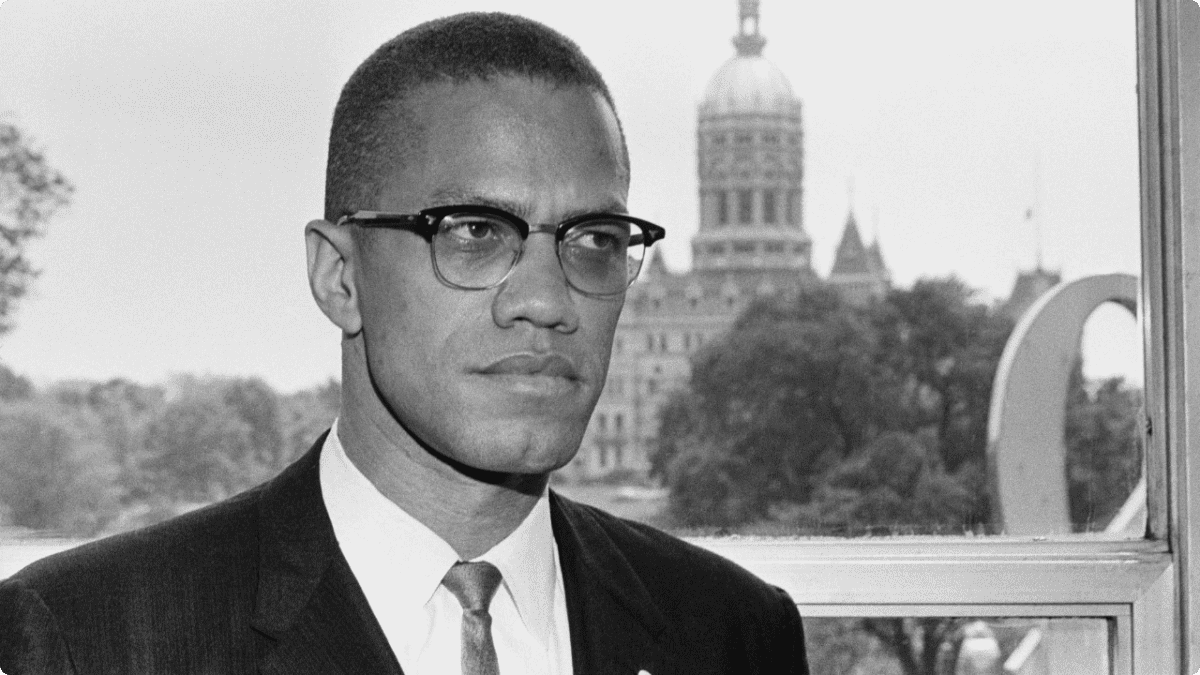
“I think this is a prime example of the devil’s chickens coming back home to roost. That the chickens that he sent out, the violence that he’s perpetuated…I think this same violence has come back to claim one of their own.”
—Malcolm X, in response to the assassination of JFK
The term “shithole country” has entered popular political lexicon due, none other, than to our commander in chief, Donald Trump. The phrase conjures images to mind of endemic corruption and violence, and signals a failure of institutions. The unsaid implication here is one of inherent inferiority, that there exists some kind of cultural rot which is native to the soil and to the people in question. As such, the response from the West is a mix of contempt, a doubling down on the abstract claim of determinate borders, and perhaps forms of patronizing charity (which at times are mechanisms used for ulterior motives). What you find missing from this series of responses, is a moment of self-reflection. There is a refusal to ask the fairly obvious question: what made these countries “shitholes” in the first place? The uncomfortable truth that our politics cannot admit, is that the disorder we project onto the world is a reflection, and a direct consequence, of a logic that has now completed its long arc and settled in our very homes. The poverty of the “Global South” and the spiritual poverty (soon to be financial, no doubt) of America are not separate crises. They are symptoms of the same problem.
To be clear, this is not to deny an element of individual responsibility within nations, nor to claim history is a force without individual agents. But such responsibility exists within a field of possibility that is not of the individual’s own making. Nor does it override the historical fact of deliberate, external projects of intrusion on the self-determination of individuals, that same individual responsibility touted as the cause of a given “shithole’s” situation. In fact, what this position reveals goes beyond the mere inadequacy of abstract universalism (what is meant here is seeing the truth of individual responsibility as a hammer, and all other problems as nails). The position is in actuality a political choice that serves a specific function of the very same problem we will soon discuss. In its utterance, two things are accomplished. The first is the inversion of the burden of analysis. It tasks as given the universal “subject”, as opposed to this subject in the world (as having reconciled their abstract individuality with the world), and focuses on their reaction to crisis. It then uses this reaction to replace the primary subject of study, which would be the institutions and historical actions that lead to the creation of so-called “shitholes”. This is comparable to analyzing a car crash by studying the bruised body parts of the passengers in the struck vehicle, while ignoring the drunk driver who ran the red light. Secondly, there is an intense process of atomization happening. By breaking down a political catastrophe into millions of individual moral choices, it makes the problem impossible to understand, let alone solve collectively. A political issue is then turned into a private moral one, which protects the agents actually responsible by making their role disappear from view. This tactic is not new. It’s the standard alibi of empire. When a plantation system produces poverty and illiteracy, the owner blames the lazy and incapable nature of the enslaved. When a colony is left in ruins after extraction, the colonizer points to the corruption or tribalism of the natives. The focus on the flaws of the subjugated is then used to retroactively justify subjugation. It says, in effect, “look at what these people do when left to their own devices”, while erasing the fact that they were never, in any meaningful sense, “left” to their own devices. Counterfactuals all around.
Additionally, take a look at the moral inconsistency. Do we ever apply this “individual responsibility” to the CEOs of mining companies that poison rivers, or AI data-centers which siphon electricity and pollute the environment? Or to the government officials who authorize coups and bombings? Almost never. For the powerful, we invoke systemic explanations- market forces, complex supply chains, geopolitical necessities such as “self-defense”. It’s only for the powerless that personal failing is invoked. We see this same alibi in the retroactive justification of a death like George Floyd’s. The frantic search for a past mistake, noncompliance, anything to atomize the event and justify the outcome, despite the reality of the flood of drugs into black neighborhoods, the destruction of the black family structure and subsequent degradation of morals, and the over-policing that made the killing possible in the first place. It’s a pattern so relentless it forced the adoption of body cameras, which are a technology now that protects the universal public from the very state power that long operated with impunity. This atomizing logic is not an isolated phenomenon. It is the domestic manifestation of an older, more expansive project. This project is the deliberate campaign of social and economic disassembly waged internationally. In more incisive (and perhaps divisive depending on the reader) words, the shithole and the suburb are two points on the same arc. To better grasp how this logic manifests at home, we must first trace its origins abroad. This way, the degeneracy we diagnose in shithole countries, and now fear in ourselves, is unmasked as the home-grown degeneracy of America, turned back in on itself. It is a highly domestic product, the original American logic of extraction and atomization, perfected abroad, now completing its global lap, and returning to dismantle the familial and civic foundations that, if America was ever great, constituted this American greatness.
The External Project
What may help in tracing this logic out, is in focusing on the aspect of colonialism that has to do with social engineering. The tools of conquest in a new region involve replacing organic political structures (organic here meaning ones that developed outside of intrusions on self-determined structures and sovereignty). This takes the form of tribal councils, kingdoms, and local governance structures that manage land and kinship being actively dismantled and replaced with extractive bureaucracies. Communal land, for example, was privatized to create individual owners, if not outright stolen, breaking the economic base of communities. If instead of communal ownership, an individual landowner or absentee corporate title held the reins, this shatters the social organism “native” to the environment. Colonialism here can perhaps be compared to an invasive species, however, this would obfuscate the nature of social and spiritual interactions between peoples. In effect, what was created were the optimal conditions for management and control of colonial territories. A population rendered legible, isolated, and dependent, can be considered the first act of disassembly.
In time, both the abstract tides shifted, meaning the world caught up to the framework of modernity, and the legitimizing ideologies of direct empire fell, and the concrete limitations of technological and military monopoly started to show themselves. For example, the material basis of direct imperialistic control was undermined. The sheer size of colonial territories ran into contradiction with the amount of informational coverage a given empire could supply, no doubt made worse by the two World Wars. Europe’s capacity for costly, direct administration was exhausted here. This, in the face of the rise of national liberation movements, made the model of occupation politically and militarily unsustainable. At the same time, the Cold War changed colonies from cash crops into geopolitical liabilities. Maintaining them risked pushing early nations into the opposing bloc. Due to these factors, and a whole confluence of forces, the flag-flying formal colony of the empire was made untenable. However, principles behind disassembly and control did not disappear, they became financialized and more abstract. This mutated the political form of a colony into the new political form of neocolonialism. Sovereignty was granted de jure, but the de facto reality was quite the opposite. True agency is vetoed through financial and institutional means, and so the imperial governor was replaced by the IMF loan officer, the colonial extraction quota was rebranded as a structural adjustment mandate, and the gunboat gave way to the corporate boardroom and “free trade” agreement. The project of disassembly continued, in new form, now operating through institutions of what are supposed to be considered international order, resulting in the creation of permanently indebted and politically vulnerable client states. Institutions of given neocolonial entities, shaped by “Structural Adjustment Plan” (SAP) mandates, were not and are not designed for public welfare or organic development. Their function is twofold. Firstly to service foreign debt, and secondly to facilitate the uninterrupted export of raw materials and resources. This political entity is hollowed out and serves as a toll-booth operator for transnational corporations.
This architecture of dependency was reinforced, of course, by ideological cover. Throughout the Cold War and into the post-9/11 “War on Terror” (particularly the USA PATRIOT Act), the support of brutal dictators and deliberate fueling of proxy wars were justified under the banners of either containing communism, or fighting terror. What this accomplished was securing Western strategic interests (like military bases or votes at the UN), and guaranteed lucrative contracts for Western corporations. The consistent outcome was the deliberate sabotage of stable, self-determined political development. Having a functioning “democracy” with a diversified economy is a lot harder to “make use of” than desperate autocrats dependent on foreign arms and cash.
Under the guidance of the IMF and World Bank “experts”, economies were forcibly specialized into single-export exporters. Oil, cocoa, diamonds, copper, coffee. Internally, this destroyed the diversified local industries and agriculture, making entire nations hostages to volatile global (or rather Western) commodity prices. And so a failed coffee harvest, or a dip in copper demand, has the potential to collapse a national budget overnight. This vulnerability was enshrined by an unfair global trade system, which finds Western nations maintaining immense agricultural subsidies and aggressive intellectual property regimes. For as much as the liberal democratic paradigm of individuals being free to compete in the market, allowing the “best” to win, a farmer in Ghana could not compete with subsidized American grain. A generic drug manufacturer in India could be sued for violating patents that kept lifesaving medicines expensive. So-called “free trade” agreements legally codify inequality, making it illegal for developing nations to protect their industries, subsidize food for their people, or achieve any sort of basis of sovereignty. Ultimately, debt becomes the primary tool of political control. Loans from SAPs and predatory international lenders act as political levers to enforce a continuous austerity. And so cuts to healthcare, education, infrastructure. No domestic capital is accumulated for meaningful internal investment. Any deviation from this prescribed neoliberal orthodoxy would trigger capital flight, the withholding of aid, and other mechanisms to punish deviation. The nation-state is then left with the hollow shell of a flag and an anthem, while its veins are tapped directly into the banks and meeting rooms of the former colonial metropole. This is the completed neocolonial project, the creation of nation states that are systematically prevented from ever becoming functionally sovereign. And so such “shitholes” are certainly not starting conditions. They are deliberately manufactured end states. Even if there are aspects of a country which are not ideal, it is a problem the country itself needs to work through and confront. This is the bare minimum for seeing peoples as equals. However, if the moral argument does not appeal to someone, the result of these actions themselves have a reaction which will harm one if continuing to do the same.
Holocaust
The system just described reduces human societies to managed inputs and outputs. It hollows out states until their only purpose is extraction, and this justifies any violence required to maintain that flow. This doesn’t stand as a sentimental critique, just to be clear. Any logic, once perfected, develops a terrifying autonomy. It is not content to operate only on the designated “other” in some far away land to be out of sight, and out of mind. It seeks new frontiers, new efficiencies. To believe this capacity for disassembly and extraction could be permanently quarantine in the colonies is quite a dangerous fantasy. The 20th century delivered the definitive rebuttal to that fantasy by proving, in detail, that the abattoir built for the periphery, could very well be reconstructed in the heart of the metropole. In the purest expression of colonial logic, it comes home in the form of the holocaust.
The holocaust was the application of this entire colonial operation to a people who were, despite the complaints of some, intrinsically a European phenomenon, and as such not a “foreign” imposition on the “pure” West. The Jewish people were not a distant colonized other, they were doctors, neighbors, poets, and of course bankers, woven into Europe’s intellectual and cultural fabric for around a millennium. This is what makes it the foundational trauma of modernity. It exemplifies the fact that the logic, developed for the “shithole”, recognizes no final boundary. Not even the boundary of the self. How can gas chambers be a regression to barbarism? They were the logical endpoint of a modernity built on disassembly, efficiency, and the bureaucratic management of life deemed unworthy of it (hence, lebensunwertes Leben). Thus, the degeneracy we assign to failed states is a profound projection. The degeneracy was never in them, it was a latent operational capacity within the modern Western system itself. Even still, this will be met with the drones of empire, which misinterpret this fact for the exclusion of individual responsiblity. The ultimate exercise of responsibility is in recognizing one’s past actions, and enabling others to live freely and responsibly, it is not found in the broad abstract assertion of individual responsibility. And so, this is the fundamental significance of the holocaust. Not in death toll, or in the mere tragedy of fact, although these should not be scoffed at. The significance of the holocaust was that it was what Europe was doing colonially, projected back onto itself.
The post-war world recoils from this event, but it never dismantled the underlying logic. It let it evolve into the neocolonialism of today by redirecting and re-domesticating its most extreme expressions, while preserving its economic and bureaucratic centrality. The colonial and neocolonial project of disassembly continued, as we have seen. And as it continues, it generates another consequence: migration.
Modern invasion panic (at least in America, which I assume you are from, but is also being repeated in other Western states) finds its historical cause in the system of globalism previously outlined. Migration flows are certainly not random. They follow lines of capital and disruption. People do not leave a thriving, self-determining societies en masse, unless something has gone terribly wrong. Something like destabilization, which points them away from the economically plundered periphery, toward the centers of political and financial power that orchestrated that blunder. The migrant, in this case, can’t possibly be an invading foreigner. Instead, they are a living reflection of the global order, a person following the path of extracted resources back to their source. They’re just following the money. And so, we find the system’s final ironic extraction; we find here the extraction of human capital itself. After stripping the land of minerals, monopolizing the agriculture, and loading the state with debt, the system now attracts the most desperate, and often the most ambitious and patriotic, survivors. They come to serve as cheap labor, or as a result of the brain drain, in the aging atomized economies of the West. The question must now be asked: are such countries “invading” America because they are essentially bad, and after destroying their states, they’re coming to destroy ours? Or is their perceived “badness” a reflection of the process found within the Western countries themselves? The truth is that degeneracy we project onto the world is a diagnosis of our own condition. The West is not being invaded by a foreign decay, it is itself degenerating from within.
Internal Degeneracy
Having disassembled societies abroad, the system inevitably, and simultaneously, turns on its own, finding a home in the most intimate space of all: the domestic sphere. The shithole is not “over there”. It’s generating principle is here, dissolving the foundations of American life from within, as domestic as apple pie. All of what I have described in colonial states bear a striking resemblance to things that have happened here in America. The colonial state was one founded in conquest and settled under the pretenses of democracy, capitalism, and everything good about the West, and in its maturity, increasingly manifested as an entity under the control of corporate and financial interests. The colonial state then hollowed out public institutions, from education to infrastructure, and sacrificed the common good on the altar of private profit. We have, in essence, the same process happening in our own society.
Familiar pathologies return. We have the loneliness epidemic, classified now on par with smoking. The logical end-state of the atomized individual engineers a world of infinite digital proximity and physical exile, where people curate their personas, or profiles, while atrophying. This is the finished product of a logic that prioritizes manageable units over messy, interdependent wholes. Where the colonial project broke (or intended to break) communal ties to better control a population, the domestic counterpart has succeeded in making us strangers to each other, and to ourselves. Skyrocketing rates of depression and “deaths of despair” (deaths by suicide, alcoholism, overdose, etc.) are signs of a failing culture. Life is reduced to transactions and career milestones, and truly, it is a rational response to the question of “what is it all for?”. The market provides no answer beyond “more”, and the state offers only the thin purporting of safety and (might I add bureaucratic) procedure. The self, having become transactional, defines us by consumption and what we do for a living, or which political faction we perform a hatred for (which itself is a type of consumption). Every other foundation for identity, whether it’s family, faith, or craft, has been rendered a commodity or dismantled altogether, if not in the process of currently being dismantled. The most damning pathology is a cultural abandonment of the vulnerable. Firstly, yes, in the sense that our individual sides are gate-kept from others, unless interfaced through the aforementioned profiles and personas of consumption. But also in the sense of those who can’t compete, such as the very young, the elderly, and the disabled. Their systematic institutionalization is handed over to the for-profit care industry as, among other things, a collapse of intergenerational duty. And so childhood and parental care are no longer sacred responsibilities, they are turned into cost-centers, or problems to be managed rather than people. This is a chilling domestic reminder of the colonial logic that deemed unproductive populations expendable. Just as the colonial “state” abroad abandoned the common welfare for the flow of resources, the market-state at home abandons the bonds of care for the flow of capital. In a sense, we have not advanced beyond the principle of the workhouse. It has been democratized and slapped with a mission statement.
We stand at the tail end of this logic. The tool crafted to disassemble has done what it was supposed to do, with an intense potency. To the degree that it disassembled those that employed the tool in the first place. The “shithole” is no longer an external destination for our contempt or charity, it is our domestic condition. We live in a shithole country. These things we point to as social ills, the destruction of social institutions, public education, health problems, increasing cost of living, they are not problems of some out there source. They are the logic of our own system, now consuming its point of origin.